The annual Perseid meteor shower reaches its magnificent peak on the night of August 12 into the early hours of August 13, producing up to 100 shooting stars per hour under ideal night skies. Renowned as the most popular celestial event of the summer, this year’s display offers an extraordinary astronomical alignment, coinciding directly with the rare August 12 total solar eclipse across Greenland, Iceland, and Spain.
Because the peak arrives during the New Moon phase, the sky will be completely dark with zero moonlight interference all night long. Observers across Europe, North America, and worldwide will enjoy prime viewing conditions from dusk until the pre-dawn hours as the constellation Perseus climbs higher into the northeastern sky.
No matter where you live on Earth, two great meteor showers happen yearly: the summer Perseids in August and the Geminids in December. Both events are famously reliable, consistently producing a zenithal hourly rate (ZHR)* exceeding 100 meteors under dark, pristine skies.
These days, the Perseid meteor shower is already ramping up, with an increasing number of meteors every night. The peak intensity will happen from August 11th to 13th this year.
*ZHR – The Zenithal Hourly Rate of any meteor shower tells us the number of meteors a single observer would see in an hour of peak activity if it were at the zenith. The conditions are considered excellent (stars are visible up to magnitude 6.5). The rate that can effectively be seen is nearly always lower and decreases the closer the radiant is to the horizon.
Let us give you all the answers you might be questioning about the Perseid meteor shower and learn how we can photograph meteors.
What is the Perseid meteor shower?
The Perseid meteors are small dust particles, crumbs of comet 109P/Swift-Tuttle, burning up as they hit our atmosphere at about 59 km/s. They are known as one of the most regular and reliable meteor showers, peaking in mid-August of every year. They are so dependable that they used to be known as tears of St. Lawrence for decades.
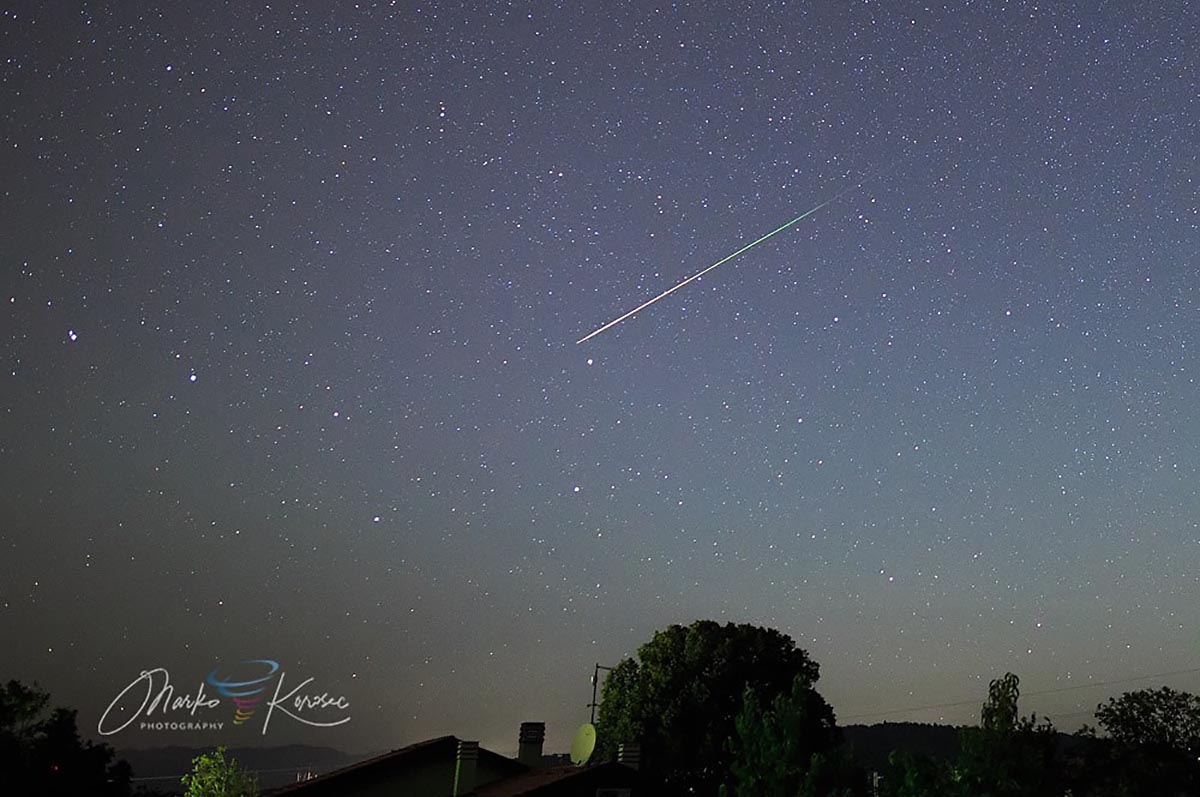
The Perseid meteor shower is rich in bright, colorful meteors, including fireballs. The celestial show occurs high in the atmosphere, well above the regular weather, at altitudes of about 100 km—right at the edge of space.
While they may seem close, the Perseids appearing overhead will be about 100 km away, while those close to the horizon will be 500 km away or more.
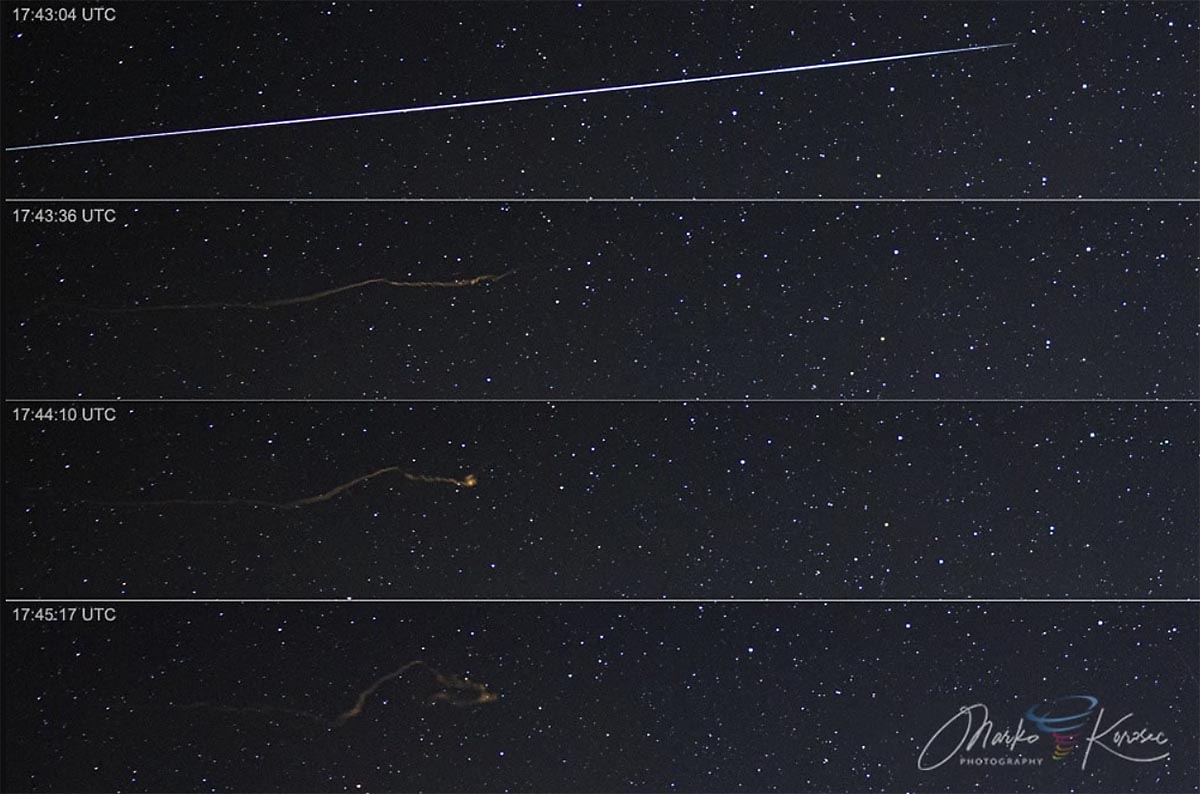
An average bright Perseid meteor is produced by a dust particle (called a meteoroid) that is only several millimeters across. The brightest Perseids often leave persistent dust trails, slowly twisted and contorted by the upper-level winds.
They can last tens of seconds if you watch them with the naked eye and minutes if you use binoculars.
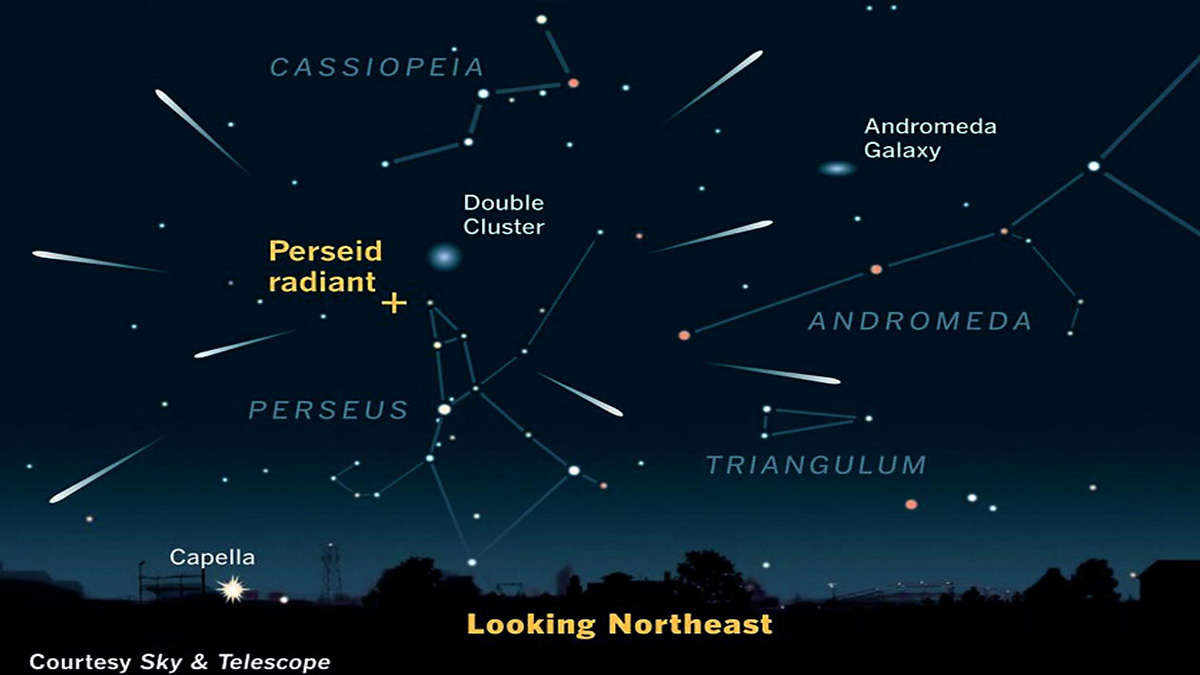
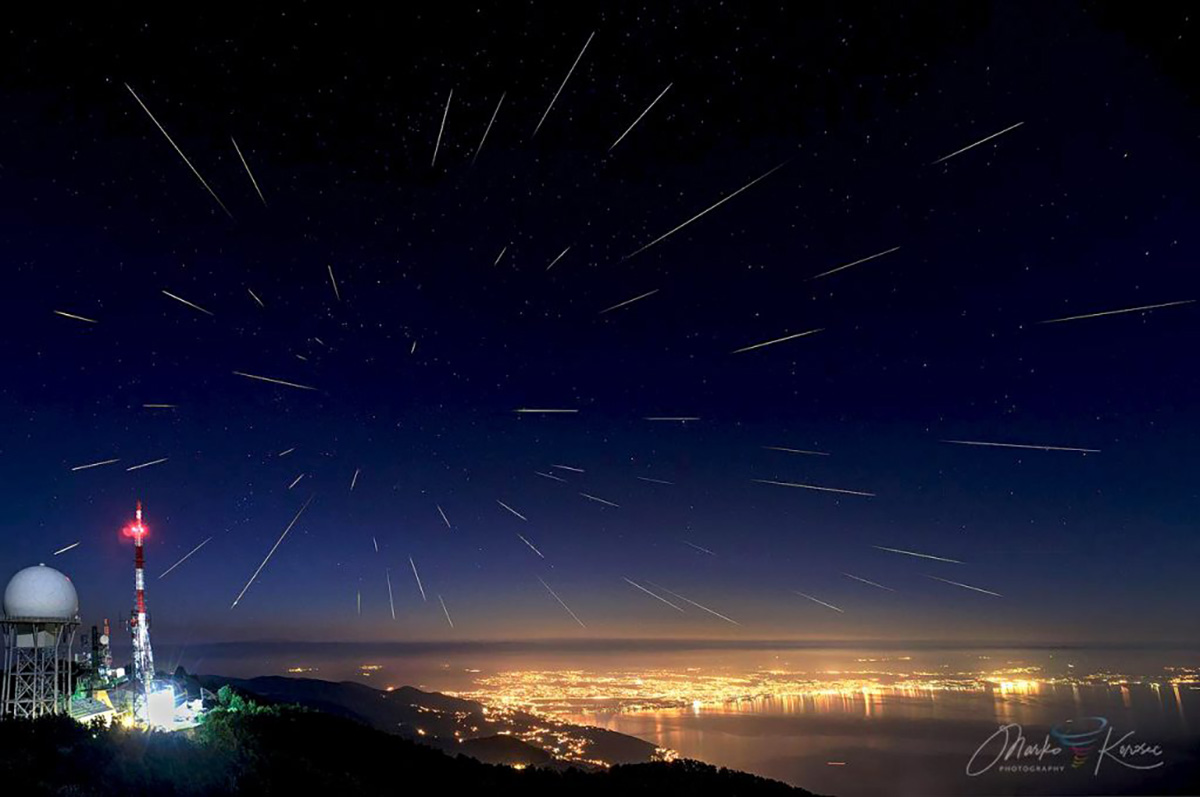
Finding the spot where the Perseids come out in the sky is pretty simple. All the meteors will look like they come from a point in the constellation of Perseus. If you trace all the Perseid meteors backward, they all seem to come from the constellation Perseus, near the famous Double Cluster. Hence, the meteor shower is named in honor of the constellation Perseus, the Hero.
This point in the sky is called the radiant. The higher the radiant is in the sky, the more meteors appear.
Perseid meteor shower during the peak in 2026
The best opportunities to see the Perseids will begin right after sunset on August 12 and continue throughout the night until dawn.
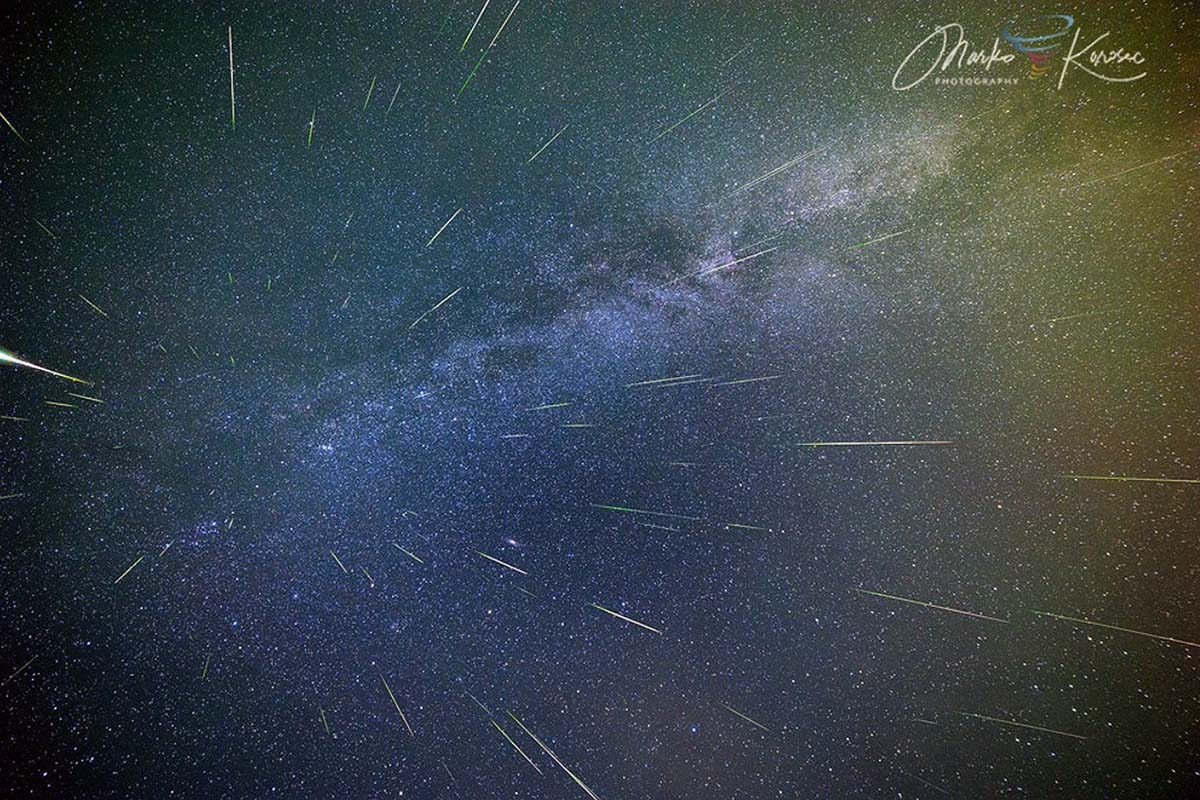
To observe or photograph the Perseid meteor shower, find a spot with the clearest skies possible, far from city lights. Heading to elevated locations in hills or mountains will provide darker skies and clearer atmospheric clarity for capturing fireballs.
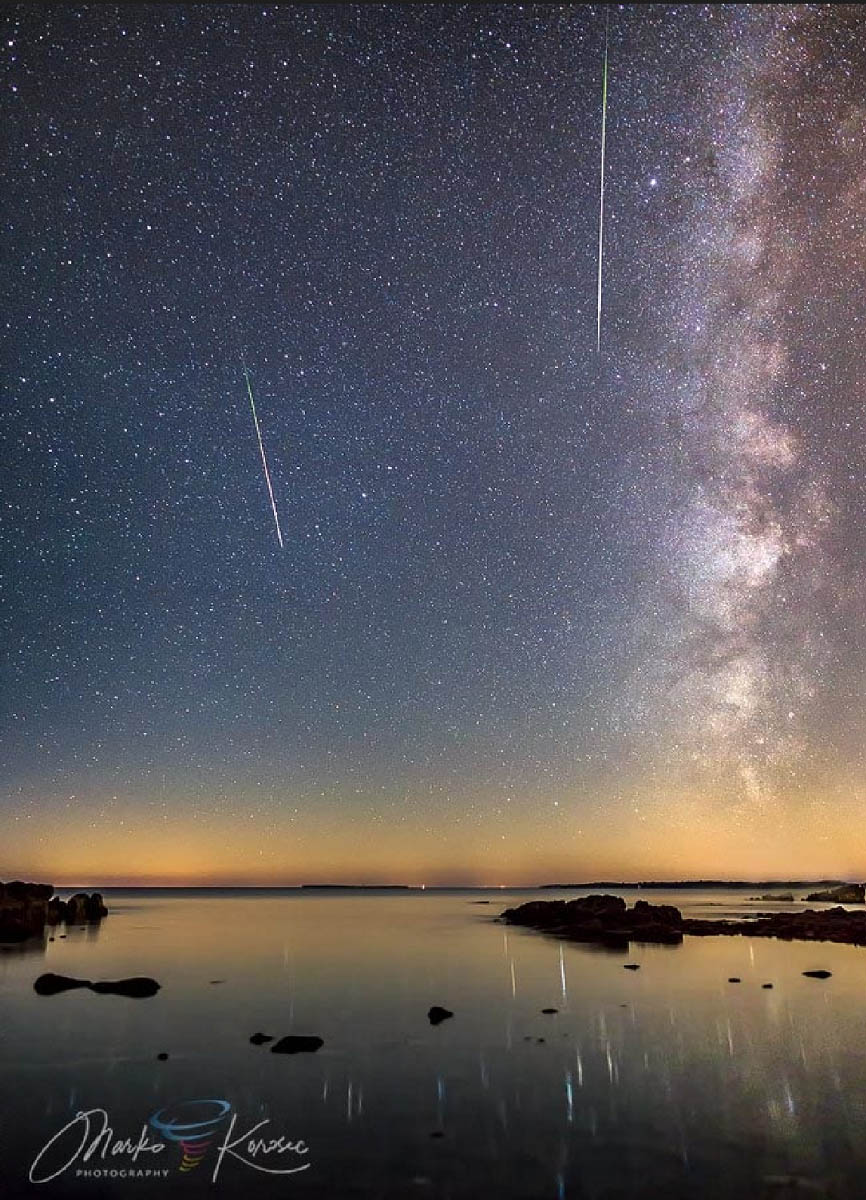
Meteor photography – how to photograph a meteor shower
It is always great to see spectacular meteors that photographers catch with their cameras. Are you tempted to try it yourself? If you want to photograph the meteors, let us give you some tips.
No matter which meteor showers you observe, it is always fun. And with some luck, you can catch a big, bright meteor – a fireball! Here is how you can get that shot, too.
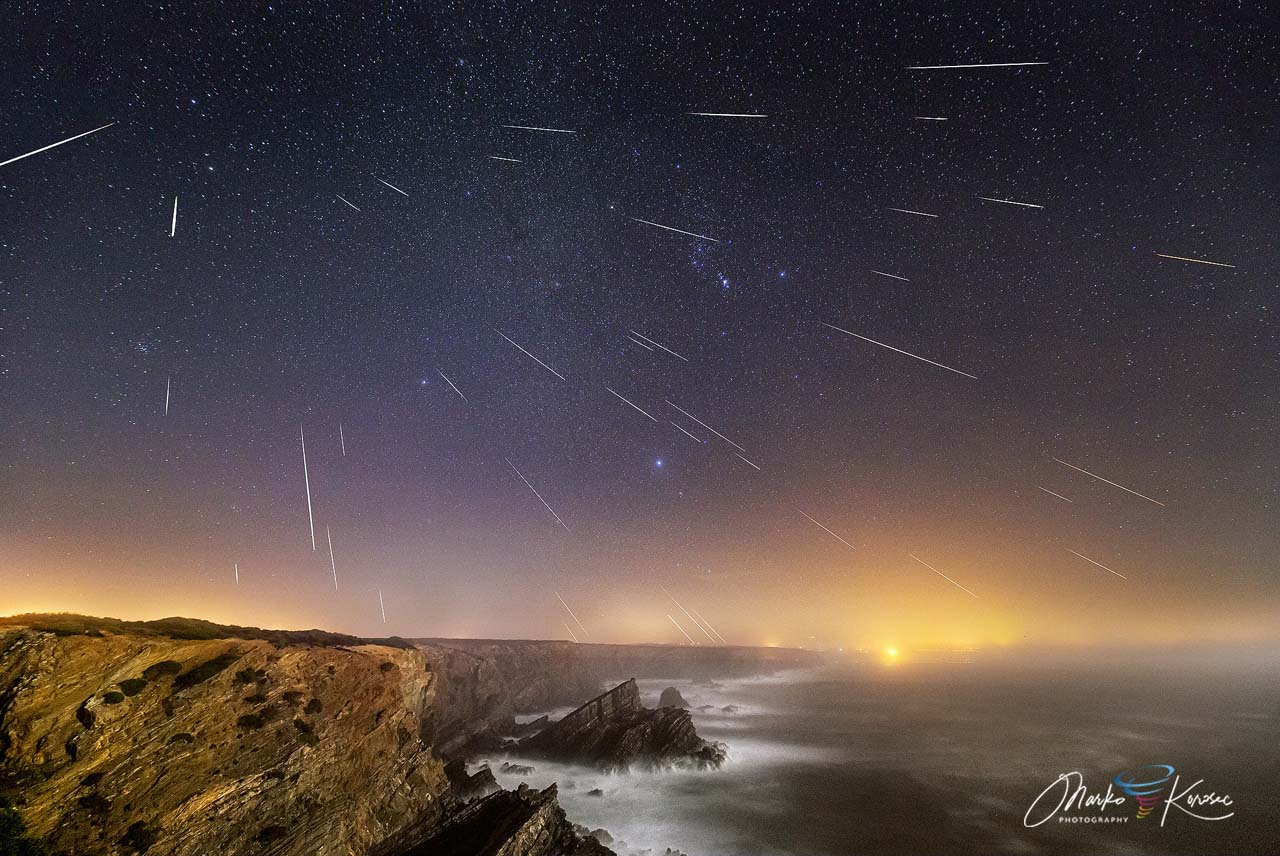
What equipment do we need?
We need a camera, lens, tripod, and some luck. However, when it comes to meteor photography, more specific equipment is necessary to get the best results out of your photography attempts.
- A digital camera with the option of making long exposures. Any interchangeable lens camera (DSLR or mirrorless) will have this option, including compact cameras, and some phone cameras nowadays can also take long exposures
- A tripod. The stronger, the better. Especially if you plan to photograph in higher elevations, where winds could be stronger
- A remote trigger for the camera (or timer) that helps you to photograph continuously and without shaking the camera when pressing the shutter button
- And indeed… a meteor shower. Preferably the highest activity possible, so during the peak nights
Learn more about the general meteor photography below:
Meteor photography – how to photograph a meteor shower
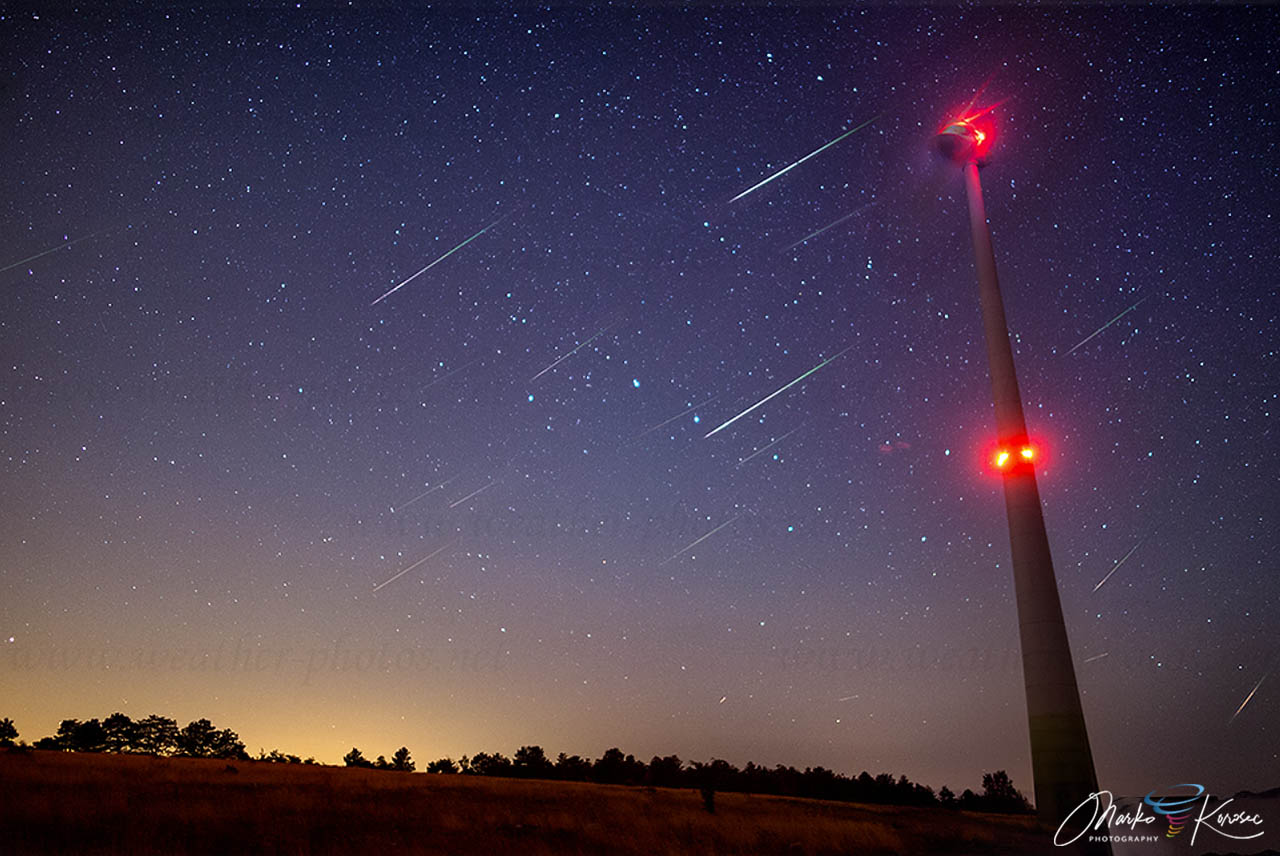
What to expect?
What can you expect as you are ready to enter the field?
First, be ready to take many photos before you catch a meteor. Be prepared to spend at least an hour or two under the starry sky to catch a good one, even in the strongest of meteor showers, like the summer’s Perseid meteor shower or the Geminids in winter.
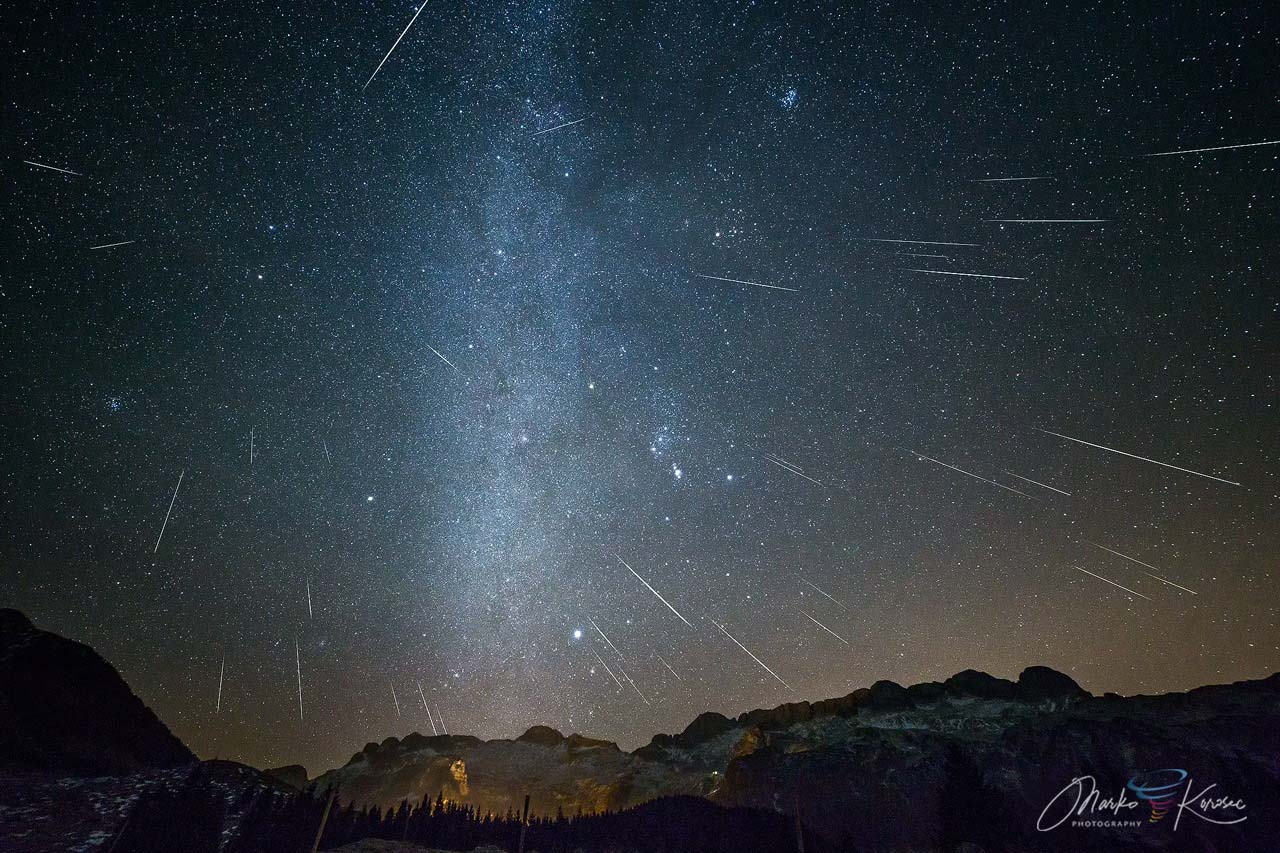
Photographing a Perseid meteor shower can often bring hours and hours of taking hundreds or even thousands of photos. But, when things go right… whoa! Imagine you catch an exploding fireball. You will forget all the waiting until then!
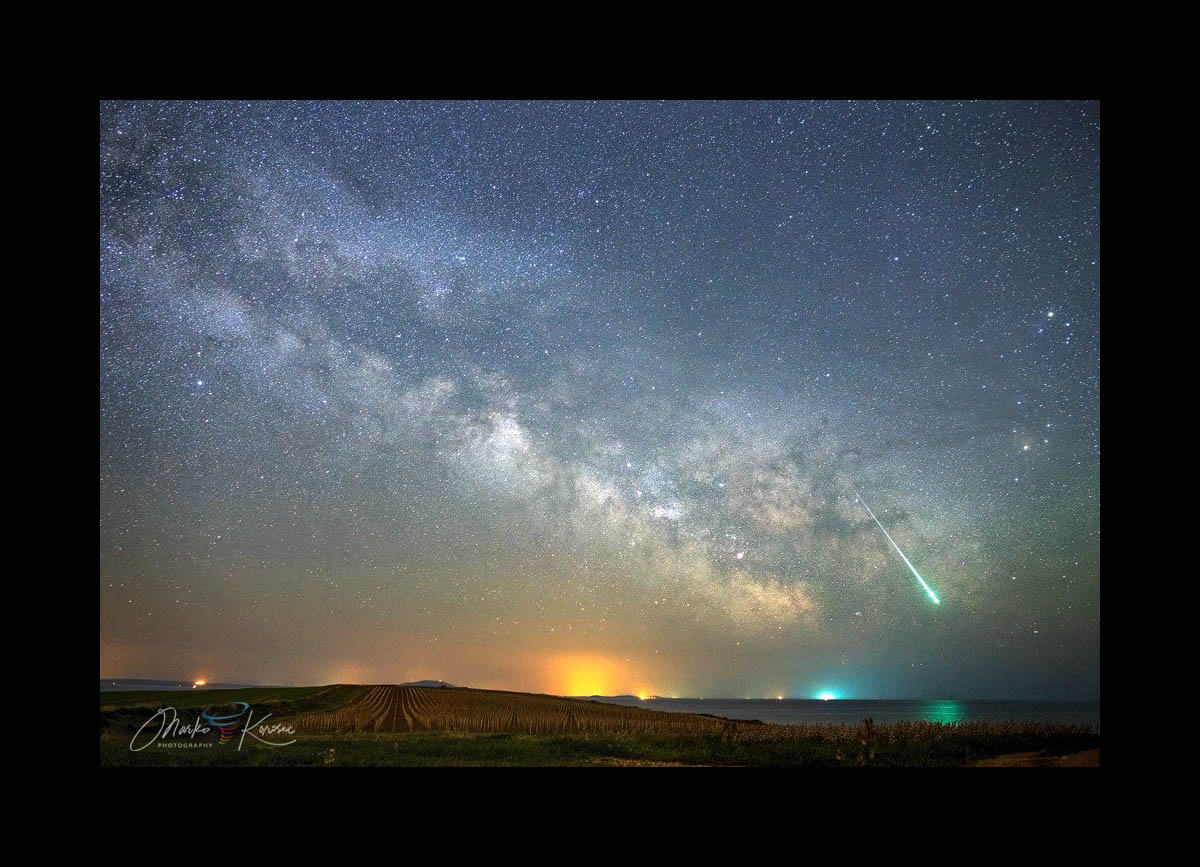
Conclusion – Perseid meteor shower 2026: A spectacular display with no Moon
What can we say at the end? The Perseid meteor shower is one of those celestial events you don’t want to miss. Seriously! Moonless nights are spectacular!
The main downside of the summer months is the weather disturbance from the daytime thunderstorm activity; the remaining clouds often extend into the nighttime hours. But weather patterns are changing, so we might get lucky and see stable weather with low cloud coverage and thunderstorm activity around the peak.
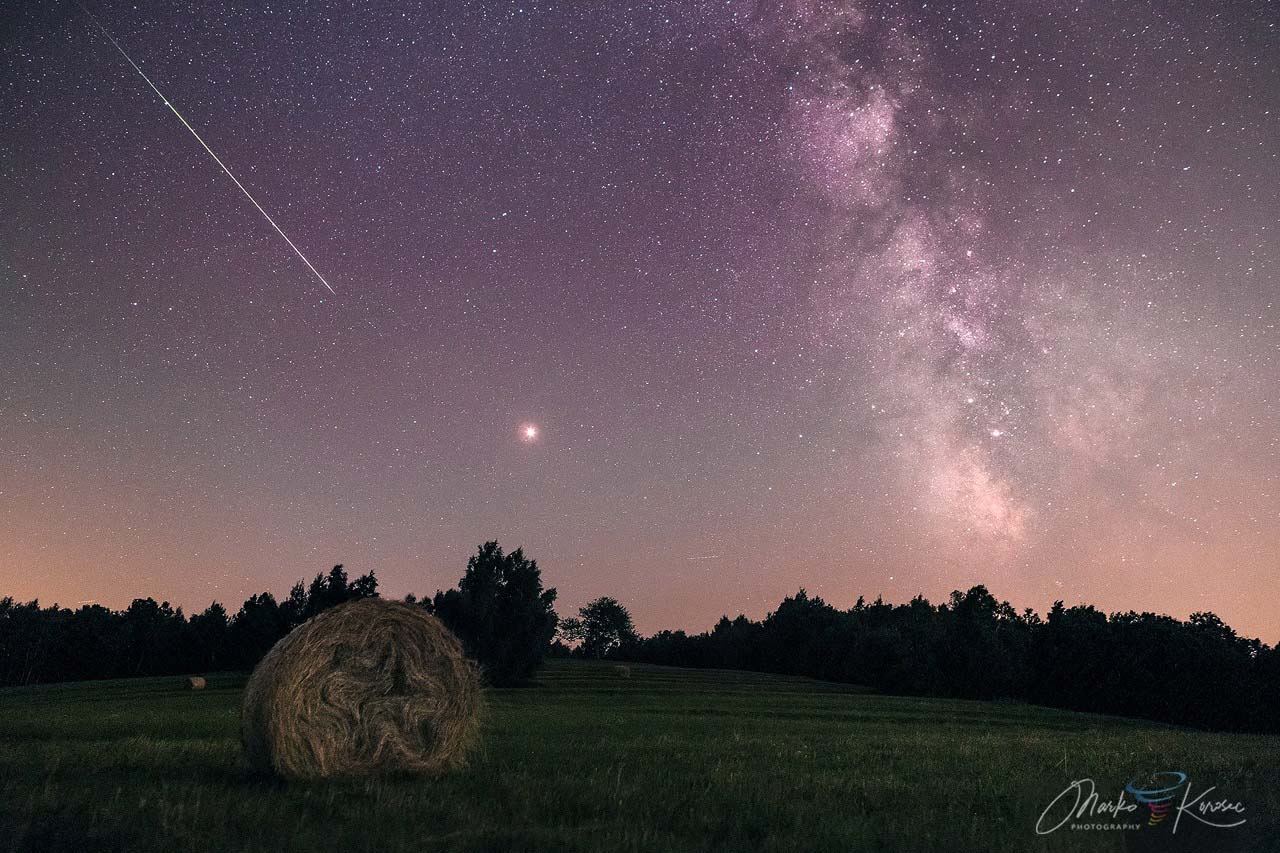
The Perseid meteor shower this year is expected to produce around 90-120 meteors per hour during both nights around the peak, on August 11th and 12th. The Perseids’ main peak occurs around August 13th, 2 UTC.
This is almost as perfect as it gets for Europe, but it is a bit less favorable for the United States and Canada since the peak occurs around 6 hours before midnight.
To conclude, it is advised to go out, observe, and photograph the Perseids from dusk all the way until dawn, as the absence of moonlight provides ideal, pitch-black viewing conditions all night long. We only need clear skies!
*ENJOY* your observation, and feel free to report your observations to our Facebook SWE Report / Discuss group; if you catch some, we will happily share them with our followers!
See also: Total Solar Eclipse Targets Europe: First Path of Totality in 27 Years Arrives August 12